The Wood That’s Worth More Than Gold
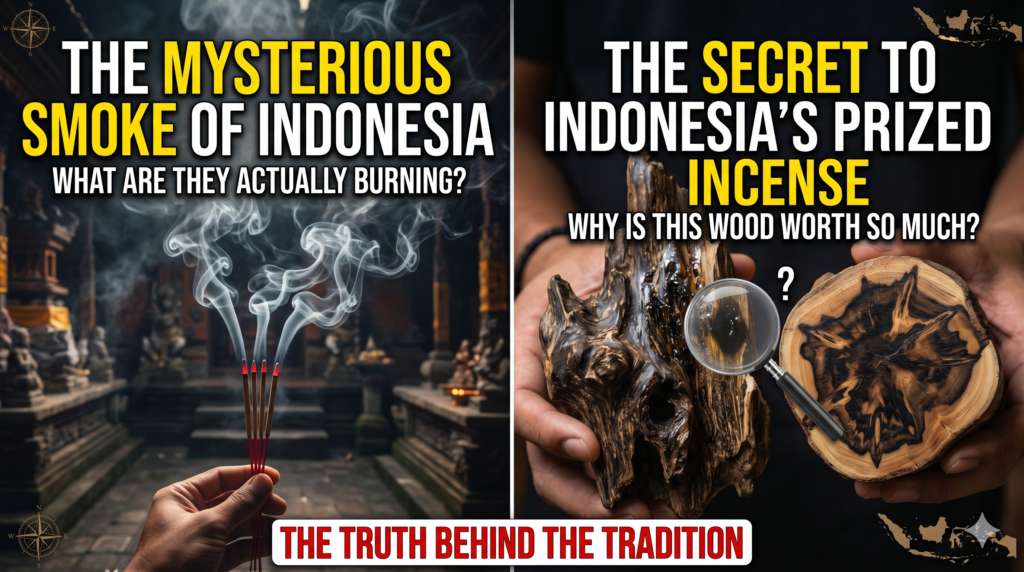
You’ve probably heard of oud — that deep, smoky, resinous fragrance found in high-end perfumes from Dior, Tom Ford, and Middle Eastern luxury houses. What you might not know is that oud comes from agarwood, and some of the world’s finest agarwood comes from the forests of Borneo, Sumatra, and Papua in Indonesia.
Wild agarwood (Aquilaria species, called gaharu in Indonesian) can sell for $10,000–$100,000 per kilogram at the top of the market. It’s one of the most expensive natural raw materials on earth.
But walk into a traditional Javanese home before a wedding, step into a Dayak longhouse before a harvest ritual, or attend a Malay kenduri feast in Kalimantan — and you’ll find someone casually burning chips of gaharu over hot charcoal like it’s the most ordinary thing in the world.
Because for Indonesians, it is. Just not for the reasons you’d expect.
Gaharu Is Not a Luxury Product Here — It’s a Spiritual Tool
The distinction is important. In Dubai or Tokyo, oud is a status symbol. In Indonesia, gaharu is a medium — a tool for communicating with the unseen world.
The belief, shared across multiple ethnic groups including Javanese, Madurese, Malay, Dayak, and Bugis communities, is that fragrant smoke carries prayers, intentions, and respect upward — to ancestors, to spirits, to God. Burning gaharu before an important event is not about smelling good. It’s about opening a channel.
This practice connects to an older animist worldview that predates both Islam and Hinduism in the archipelago — and which, remarkably, has been absorbed into both rather than replaced by them. A devout Muslim in Java might burn gaharu before reciting a prayer. A Hindu family in Bali might use it during temple ceremonies. A Dayak elder might burn it before entering the forest for a ritual hunt.
When and Why Agarwood Is Burned
At Weddings and Betrothals
Gaharu smoke is used to bless the space before a wedding ceremony begins. The belief is that fragrant smoke purifies the environment of negative energy and invites good spirits to witness and bless the union.
During Selamatan (Communal Prayer Feasts)
A selamatan is a communal gathering held to mark life events — a birth, a death anniversary, a new home, a business opening. Gaharu is often burned as the prayers begin, setting the spiritual tone of the gathering.
Before and During Spiritual Meditation (Tapa or Semedi)
Javanese mystics (abangan or kejawen practitioners) use gaharu smoke as an aid during deep meditation. The scent is believed to help quiet the mind and facilitate communication with ancestral spirits.
At Graves of Saints and Sacred Sites
At the tombs of Islamic saints (wali) across Java — places like Sunan Kalijaga’s tomb in Demak or Sunan Ampel in Surabaya — you’ll often smell gaharu burning. Pilgrims bring chips of the wood as an offering and burn them while praying.
During Harvest and Agricultural Rituals
In Dayak communities in Kalimantan, gaharu is burned as part of rituals that mark the planting and harvesting cycle. Offering fragrant smoke to the spirits of the land is a way of asking permission and expressing gratitude.
Why This Wood Specifically?
This is a question worth asking. Why gaharu and not ordinary incense?
The answer lies in the wood’s origin story. Agarwood resin doesn’t exist in a healthy Aquilaria tree. It only forms when the tree is wounded — by a fungal infection, an insect attack, or physical damage. The tree responds to the wound by producing a dark, dense, fragrant resin that saturates the heartwood over decades.
In other words, gaharu is the product of a tree’s suffering and resilience. This gives it profound symbolic weight in Indonesian spiritual thought. It represents transformation through hardship — something that resonates deeply in a culture with a rich tradition of finding meaning in difficulty.
What Tourists Should Know When They Encounter Gaharu
1. Don’t treat it as a shopping item in spiritual contexts.
If you see gaharu being burned during a ceremony, don’t immediately start asking about price or where to buy it. Read the room — you’re in a sacred moment.
2. Burning gaharu is an invitation, not a performance.
If a local host burns gaharu before a meal or gathering you’re attending, understand that this is them making a spiritual gesture of welcome and protection on your behalf too. A simple respectful nod or “terima kasih” (thank you) is appropriate.
3. Buying gaharu as a souvenir is fine — with caveats.
Wild-harvested agarwood is a CITES-regulated species. Make sure any gaharu you purchase comes with documentation of legal sourcing. Plantation-grown gaharu is legal, widely available, and still very fragrant — a great ethical souvenir.
4. The smell is not for everyone — and that’s okay.
Gaharu smoke is deep, dark, animalic, and complex. Some people find it immediately transcendent. Others find it overwhelming. If you’re invited to smell or hold burning gaharu chips, be honest and gracious either way.
FAQ
Q: Is agarwood the same as oud?
A: Yes. “Oud” is the Arabic name for agarwood. The Indonesian term is “gaharu.” It refers to the same resin-saturated heartwood from Aquilaria species trees.
Q: Can I bring agarwood home from Indonesia?
A: Plantation-sourced agarwood products (chips, oil, incense sticks) are generally fine to bring home. Wild-harvested agarwood is CITES Appendix II regulated — you need documentation. Always declare it at customs.
Q: Where can I buy genuine agarwood in Indonesia?
A: Reputable sources include specialty shops in Pontianak (Kalimantan), traditional markets in Surabaya’s Arab Quarter (Ampel), and certified online sellers. Avoid street vendors offering “wild” gaharu at suspiciously low prices.
Q: Why is wild agarwood so expensive?
A: Wild-quality resin takes 50–150 years to develop fully in the tree. Overharvesting has made old-growth wild gaharu extremely rare. The combination of scarcity, demand from the Middle East, and the complexity of the scent drives the extraordinary price.